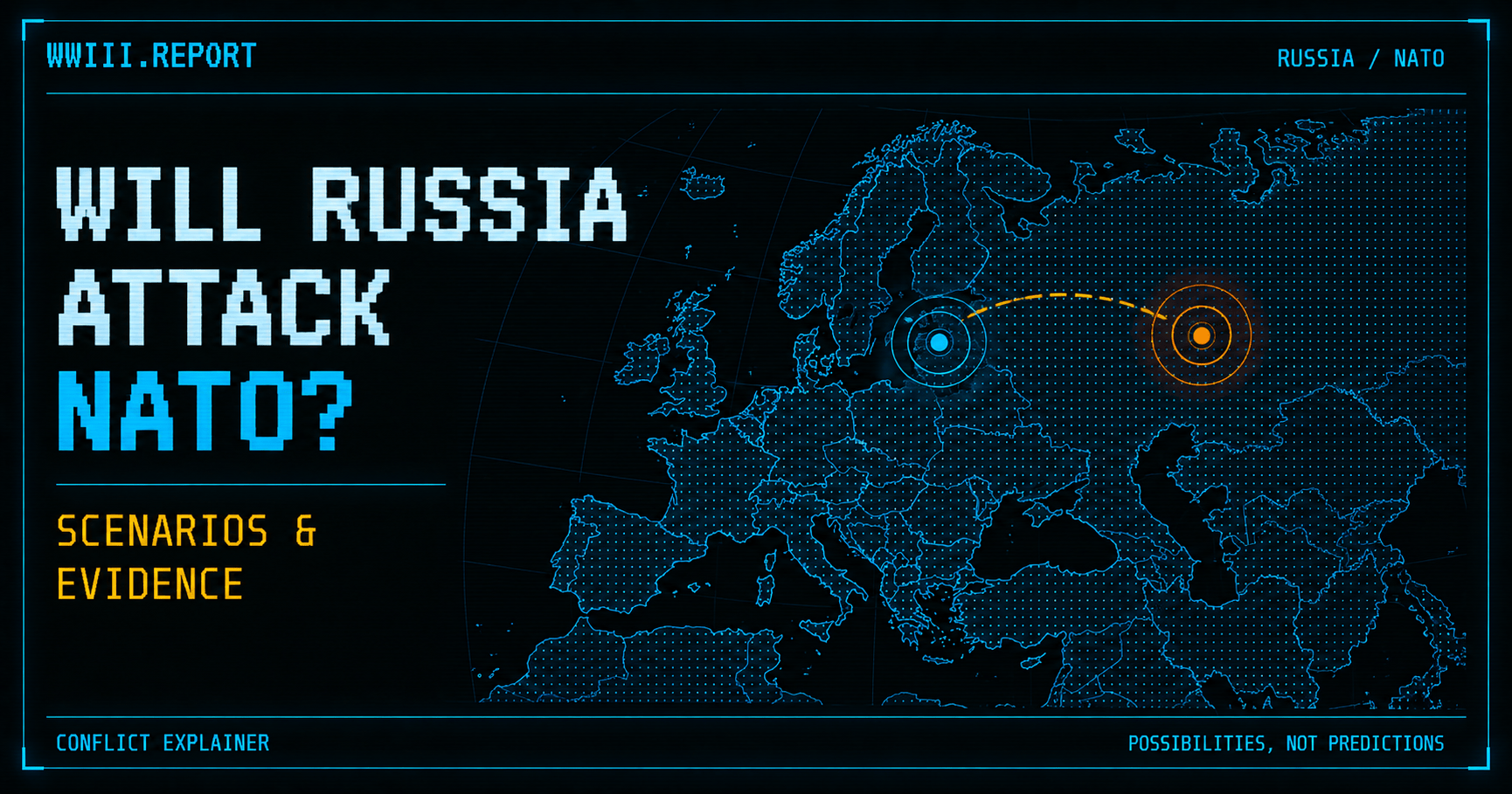
Will Russia attack NATO? Scenarios and evidence to watch
Russia–NATO tensions can escalate through deliberate attacks, spillover or miscalculation. Dated incidents and intelligence assessments explain the risks without turning military preparations into a prediction of war.
Contents
An attack on NATO is a risk governments prepare for, but military preparations do not establish that Russia has decided to launch one. Direct fighting could develop through a deliberate attack, spillover from another conflict or a confrontation that leaders fail to contain.
The useful distinction is between capability, meaning what a military could do, and intent, meaning what its leadership has decided or wants to do. Neither a weapons programme nor an exercise, considered alone, answers both questions.
Does support for Ukraine mean NATO is already fighting Russia?
Supplying weapons, coordinating assistance and conducting combat operations are different forms of involvement. Describing all of them as the same activity obscures the decisions that could widen the war.
For example, NATO’s July 2024 summit established a programme to coordinate equipment and training for Ukraine, known as NSATU. The declaration said that the arrangement, operating in Allied states, would not make NATO a party to the conflict under international law. Washington Summit Declaration.
That statement concerned a defined support arrangement. A separate decision to use a country’s own forces in combat would need to be assessed on its own terms. The Russia–NATO timeline helps distinguish assistance, deployments, airspace incidents and direct hostilities.
What could turn the confrontation into direct war?
Several pathways are possible. These are scenarios to understand, not predictions that any particular one will occur.
A deliberate attack on an Ally. Russia could decide to use force against a NATO member if its leadership believed the gains outweighed the expected response. The danger would include misjudging the willingness of other Allies to help. NATO’s collective-defence commitment is intended to make such a calculation less attractive.
An incident followed by retaliation. A missile, aircraft or naval encounter could cause casualties and prompt a response before governments agree on what happened. Misidentifying the attacker or the purpose of an action could then widen the confrontation.
A campaign of hostile activity that escalates. Sabotage or cyber operations could cause greater harm than expected, or lead governments to change how they respond. In May 2024, NATO attributed an intensifying campaign of sabotage, violence and other hybrid activity to Russia. That is an attributed assessment; responsibility for an individual incident still needs evidence. North Atlantic Council statement.
The common danger is a sequence of decisions in which each side expects the other to back down, but neither does.
What do past incidents show?
The November 2022 explosion in eastern Poland illustrates why attribution matters. NATO’s preliminary assessment on 16 November said a Ukrainian air-defence missile was the likely cause and reported no indication of a deliberate attack. This was a dated assessment of that incident, not a general explanation for later incursions. NATO’s account.
A different case occurred in September 2025. NATO reported Russian drones entering Polish airspace; Poland requested Article 4 consultations, and NATO subsequently launched Eastern Sentry to strengthen its eastern defences. Announcement of 12 September 2025.
Both events required a response, but their circumstances differed. The first questions are what entered the territory, who controlled it, what damage occurred and what investigators can establish. A dramatic headline cannot replace those distinctions.
Do intelligence warnings give a date for a Russia–NATO war?
No. A capability estimate describes what might become possible under stated conditions. It does not identify a settled decision to attack.
An assessment dated 9 February 2025 from Denmark’s Defence Intelligence Service made that distinction explicitly. It described Russian preparation for a possible war while saying this did not mean a decision to start one had been made.
Its often-cited five-year estimate concerned readiness for a large European war after the Ukraine war stopped or froze, assuming NATO did not rebuild at the same pace and the United States did not become involved. Those conditions belong to the estimate. It was not a fixed countdown beginning on publication day. Original Danish assessment.
When reading a newer warning, check its date, the kind of conflict being assessed and the assumptions behind it. “Could be capable” and “will attack” make different claims.
What could reduce the risk?
Credible defence can raise the expected cost of an attack. NATO’s eastern-flank arrangements combine national forces, multinational units, reinforcement planning and air defence. Their stated purpose is deterrence and defence. NATO’s eastern-flank overview.
Communication and investigation address a different problem: preventing a dangerous incident from being mistaken for a larger attack. Clear messages about what happened and what a response is intended to achieve can leave room to stop escalation.
Neither approach guarantees success. Defence depends on usable capabilities and political commitment; crisis communication depends on governments being willing to use it.
What evidence should readers watch?
Look for verified changes in behaviour: confirmed armed attacks, official findings about responsibility, decisions to enter combat and the actual implementation of defence measures. Read those alongside the limits stated by the source.
The Russia–NATO report follows subsequent developments. The central question is whether new evidence changes the confrontation itself, rather than simply making the possibility of war sound more alarming.
Tags Deterrence Escalation Explainer Military alliances NATO
SOURCES 8 · checked 20 Sep 2026
- Washington Summit Declaration nato.int
- North Atlantic Council statement nato.int
- NATO’s account nato.int
- Announcement of 12 September 2025 nato.int
- Original Danish assessment fe-ddis.dk
- NATO’s eastern-flank overview nato.int
- Russia–NATO timeline wwiii.report
- Russia–NATO report wwiii.report
READ NEXT

World War 3 5 min read
How could World War 3 start? Five scenarios explained
A regional conflict could widen if major powers enter direct combat and fighting spreads across regions. Five scenarios explain how that could happen, and where diplomacy and restraint could interrupt escalation.
World War 3 4 min read
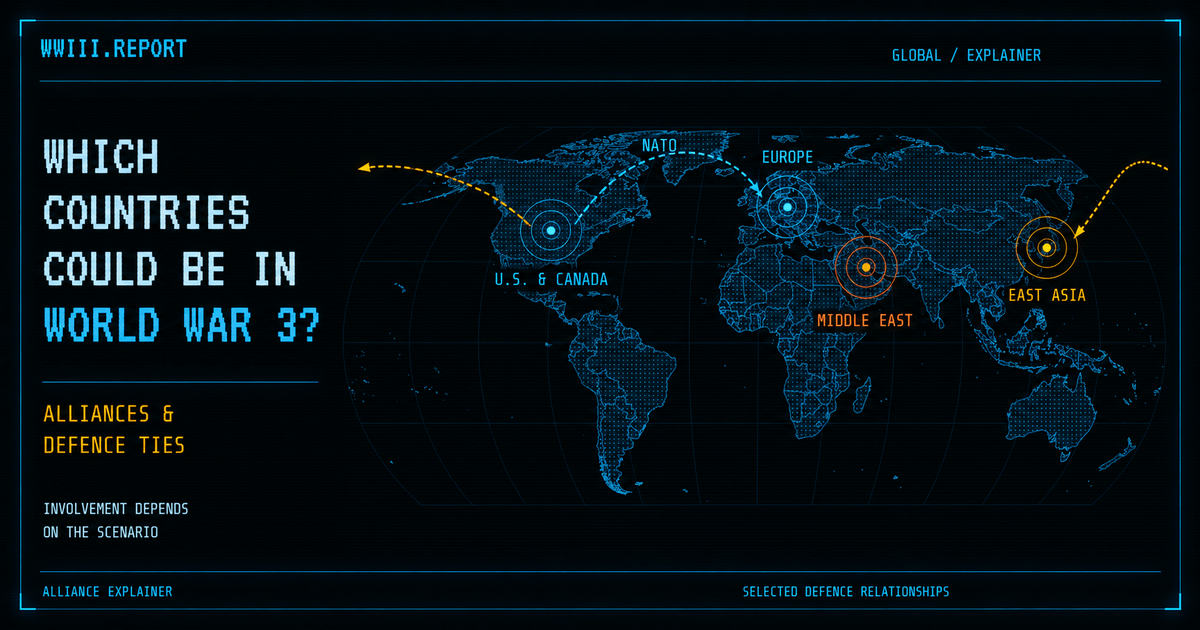
Which countries could be involved in World War 3?
The countries involved in a wider war would depend on where it began and how governments responded. NATO commitments, US alliances in Asia and foreign military bases help explain the possible roles.
Russia – NATO 4 min read
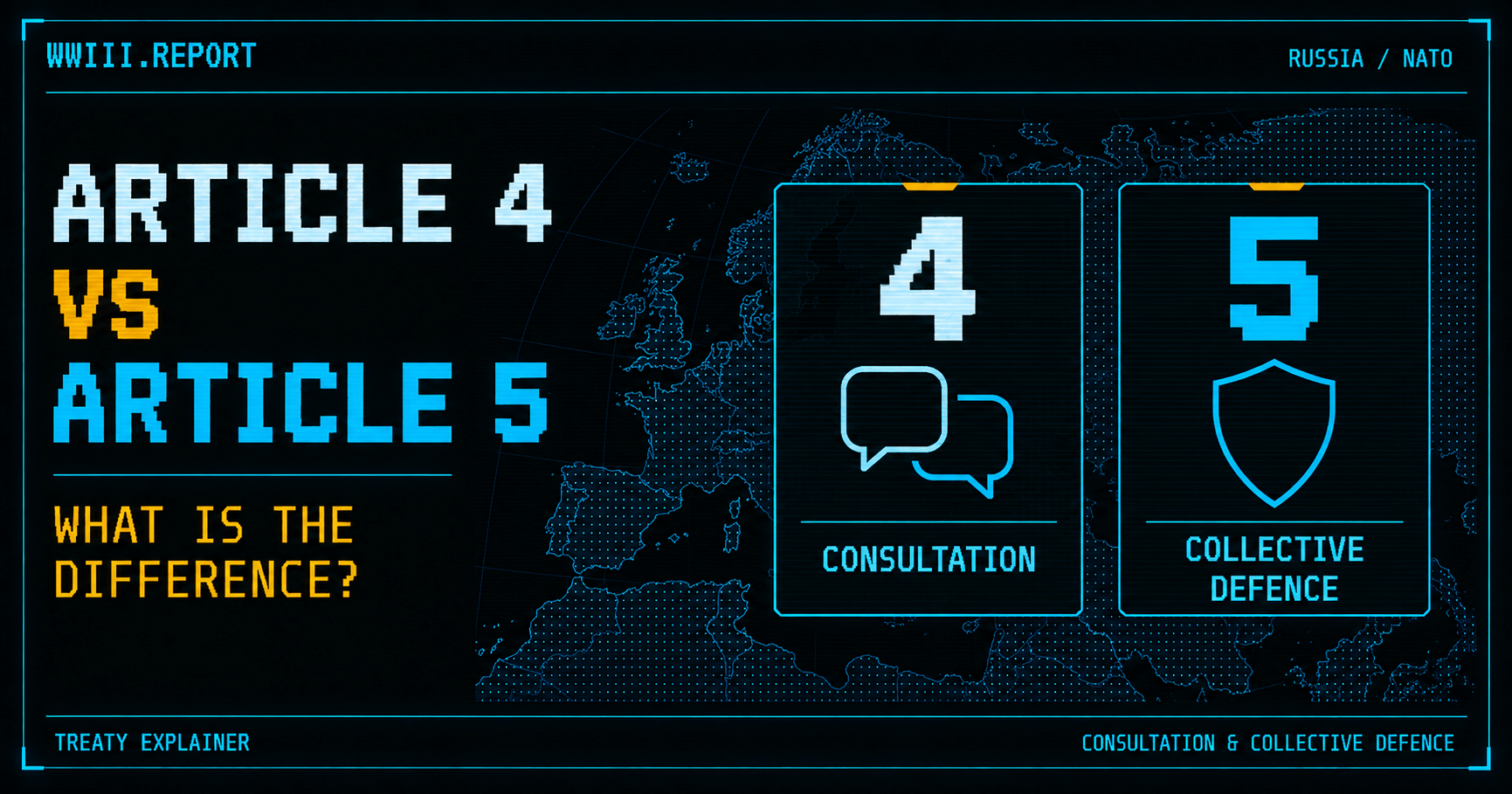
NATO Article 4 vs Article 5: what is the difference?
Article 4 brings NATO members together when an Ally considers its security threatened. Article 5 creates a duty to assist after a covered armed attack. Neither sets an automatic military response to every incident.