Why is the Strait of Hormuz important? Oil and shipping explained
The Strait of Hormuz connects major Gulf energy exporters with world markets. Its importance comes from the scale of oil and gas shipments, limited alternatives and the difference between a threat to shipping and an actual interruption.
Contents
The Strait of Hormuz is important because it connects major Gulf oil and gas exporters with international markets through a narrow sea passage with limited alternatives. In 2025, around 20 million barrels of oil and petroleum products passed through it each day, according to the International Energy Agency. IEA factsheet.
A disruption can therefore affect countries far from the Gulf. The consequences depend on how much cargo stops moving, how long the interruption lasts and what supplies buyers can obtain elsewhere.
Where is the Strait of Hormuz?
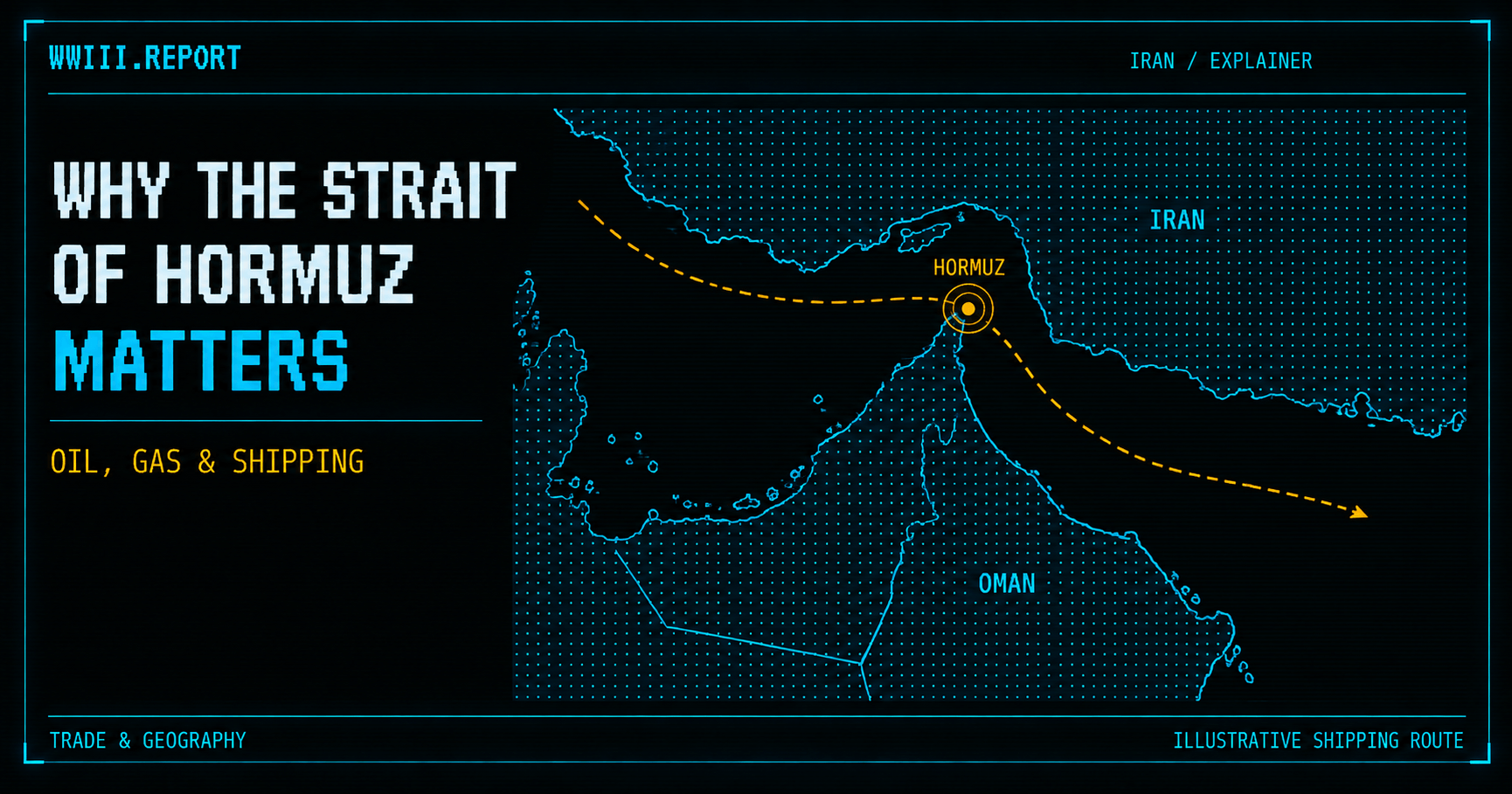
The strait lies between Iran and Oman. It links the Persian Gulf to the Gulf of Oman and onward to the Arabian Sea. It is the sea exit for tankers loading at many ports inside the Gulf. The US Energy Information Administration explains the route.
This geography makes Hormuz different from a route where a ship can simply take a longer journey around a continent. A vessel already inside the Gulf needs access through the strait to reach the open ocean.
How much oil and gas passes through Hormuz?
The IEA’s February 2026 factsheet provides a useful prewar baseline using 2025 trade:
| Measure | 2025 baseline |
|---|---|
| Oil and petroleum products passing through Hormuz | About 20 million barrels per day |
| Share of global seaborne oil trade | Around 25% |
| Share of global liquefied natural gas trade | Almost 20% |
These measures use different denominators. A quarter of seaborne oil trade does not mean a quarter of all world energy use. Nor do the figures describe the amount moving through Hormuz today. Source and definitions: IEA.
Liquefied natural gas, or LNG, also deserves attention. It is natural gas cooled into liquid form for transport by ship. Qatar dominates LNG exports through the strait. In its separate 2024 dataset, the EIA estimated that 83% of LNG passing through Hormuz went to Asian markets. EIA’s LNG analysis.
Can pipelines replace the shipping route?
Some oil can bypass Hormuz. Saudi Arabia’s East–West pipeline reaches the Red Sea, while the UAE has a pipeline to Fujairah on the Gulf of Oman. These are alternative export routes for connected supplies, rather than a replacement for every Gulf port. EIA’s pipeline overview.
Capacity, available loading facilities and the location of the oil all matter. A pipeline’s maximum design capacity is not necessarily spare capacity that can be used immediately.
Gas has a different constraint: the IEA identifies no alternative route capable of moving Qatar’s and the UAE’s seaborne LNG exports to world markets on the same scale. Oil bypass capacity should therefore not be counted as a solution for missing LNG cargoes. IEA assessment of alternative routes.
What does a Strait of Hormuz “closure” mean?
A threat to close the strait, an attack on a ship and a sustained collapse in commercial traffic describe different situations. Reports should specify what has actually happened.
Practical disruption does not require every vessel to stop. In an analysis published on 22 June 2026, the IEA estimated that oil flows through Hormuz had averaged 2.7 million barrels per day during March–May, compared with around 20 million before the conflict. That is a dated measure of severe disruption, not a September traffic count. IEA analysis of the supply shock.
Safety conditions also matter. At its March 2026 emergency session, the International Maritime Organization condemned attacks on commercial vessels and called for safe passage. It also highlighted navigation-signal interference and the welfare of crews unable to leave the region. IMO Council statement.
An announcement about reopening is consequently only part of the picture. Evidence of sustained vessel movements and safer operating conditions is needed to assess whether normal trade is returning.
Why can disruption affect energy prices elsewhere?
Buyers facing a shortfall seek replacement cargoes, while other suppliers and inventories help absorb the loss. Those adjustments can spread the effects beyond the countries that normally import through Hormuz.
The IEA’s June 2026 analysis documented several responses: stock drawdowns, more exports from alternative suppliers, greater use of bypass routes and changes in refinery operations. These measures eased some pressure while the supply interruption continued. How the oil market adjusted.
The scale of the price effect depends on the balance between lost supply, replacement volumes and demand. A dramatic shipping headline alone cannot establish a particular future oil price.
Where can I check the latest Hormuz developments?
Use the Iran war monitor for dated reporting on shipping and the wider conflict. When comparing updates, check the observation time, the type of vessel or cargo being counted, and whether the report describes announced restrictions or measured movements.
Tags Iran war LNG Oil Shipping Strait of Hormuz
SOURCES 6 · checked 23 Sep 2026
- IEA factsheet iea.org
- The US Energy Information Administration explains the route eia.gov
- EIA’s LNG analysis eia.gov
- IEA analysis of the supply shock iea.org
- IMO Council statement imo.org
- Iran war monitor wwiii.report
READ NEXT
Iran War 3 min read
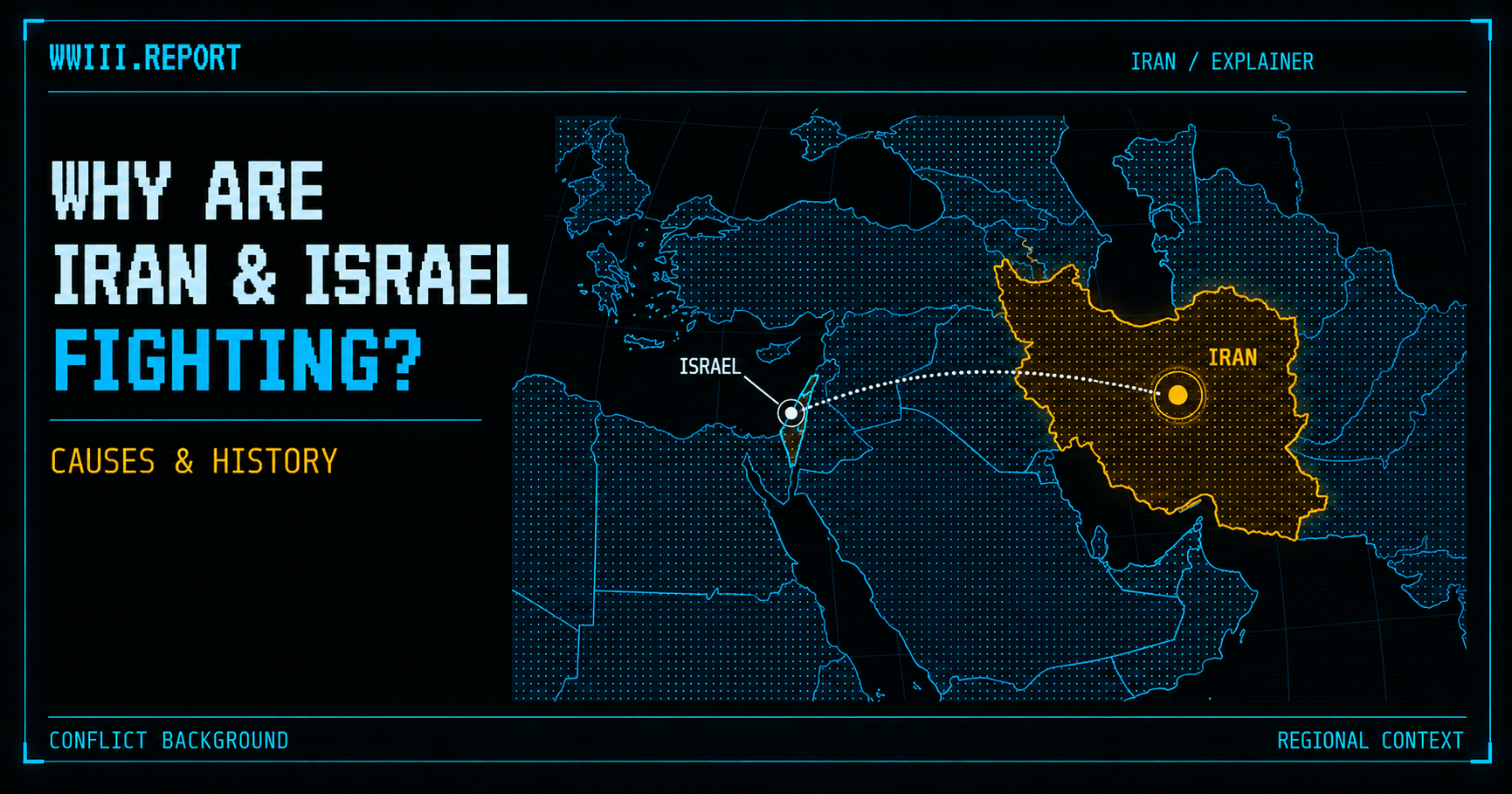
Why are Iran and Israel fighting? Causes and history
Iran and Israel’s confrontation grew from a political break after 1979, rival security strategies, armed partnerships and the nuclear dispute. Direct attacks in 2024 and the wars of 2025 and 2026 changed its scale.

World War 3 5 min read
How could World War 3 start? Five scenarios explained
A regional conflict could widen if major powers enter direct combat and fighting spreads across regions. Five scenarios explain how that could happen, and where diplomacy and restraint could interrupt escalation.
World War 3 4 min read
Emergency food storage: what to buy and how to preserve it safely
A useful emergency food supply covers meals your household can actually prepare. Learn what to store, how to rotate it, and the food-preservation mistakes that can make an emergency more dangerous.