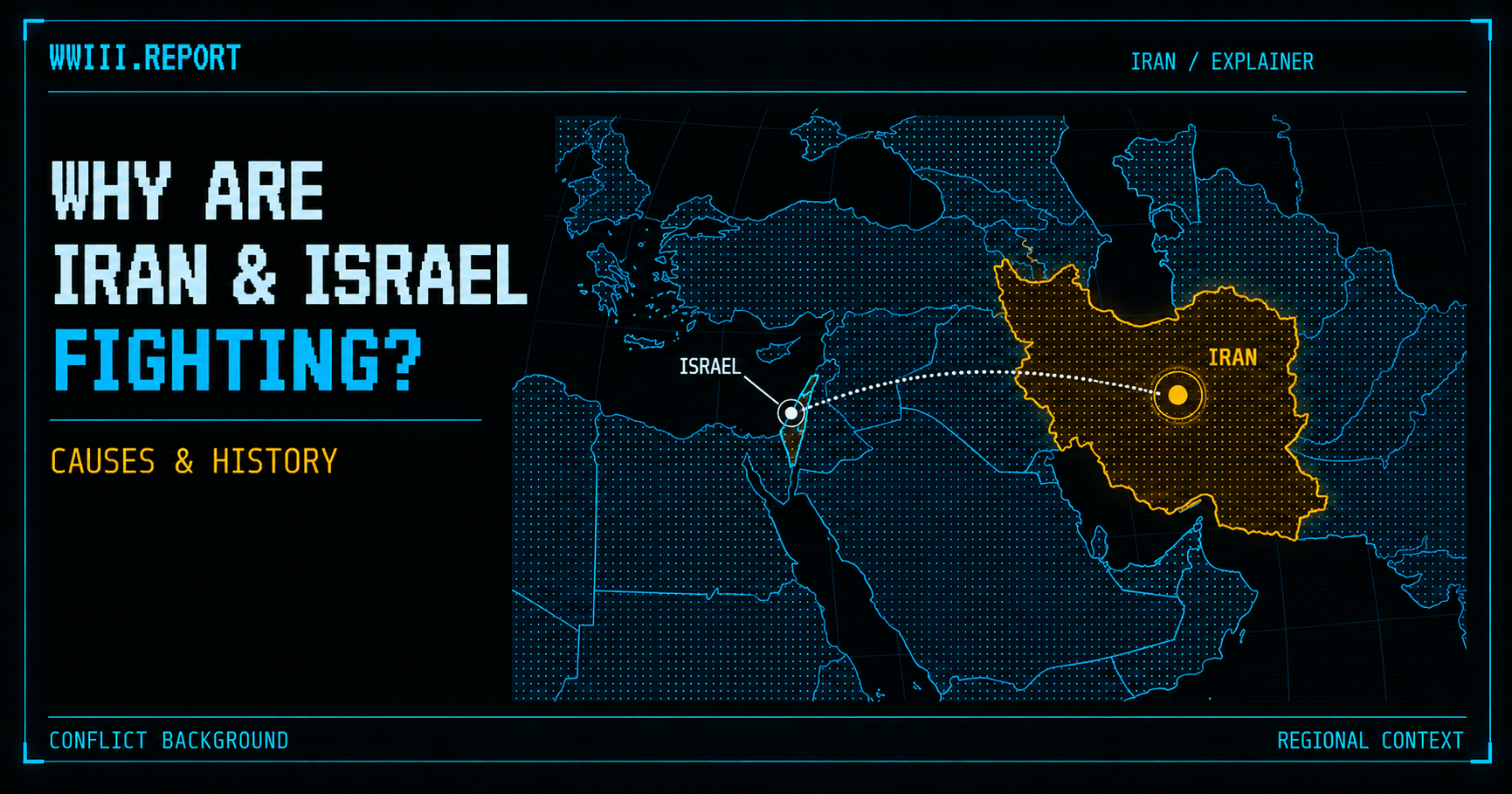
Why are Iran and Israel fighting? Causes and history
Iran and Israel’s confrontation grew from a political break after 1979, rival security strategies, armed partnerships and the nuclear dispute. Direct attacks in 2024 and the wars of 2025 and 2026 changed its scale.
Contents
Iran and Israel are fighting because a long political and security rivalry has escalated into direct military confrontation. The central issues include the Iranian leadership’s opposition to Israel, Iran’s support for armed groups that fight it, Israeli efforts to weaken those threats, and the dispute over Iran’s nuclear programme.
The rivalry was not always this intense. The two states cooperated before Iran’s 1979 revolution. Later, attacks and counterattacks increasingly replaced that relationship. Encyclopaedia Iranica documents the historical shift.
Were Iran and Israel once allies?
Under the shah, Iran and Israel developed close, largely informal strategic ties, including security cooperation. Shared regional concerns helped sustain the relationship.
The 1979 revolution changed Iran’s government and foreign policy. The new Islamic Republic adopted opposition to Israel as a central position, bringing the earlier relationship to an end. This political turning point helps explain how a working relationship became a confrontation. Historical background.
Government policy and public opinion can differ. In accounts of military decisions, “Iran” and “Israel” generally refer to governments and armed forces. Reports should identify the decision-maker wherever the evidence allows.
Why do Hezbollah and other armed groups matter?
Iran’s regional relationships extended the confrontation beyond the two countries’ borders. Hezbollah, based in Lebanon, became one of its most important armed partners.
The Council on Foreign Relations describes how Iran and its Islamic Revolutionary Guard Corps provided funding and training as Hezbollah emerged during Lebanon’s civil war. The group developed its own political role in Lebanon as well as a military campaign against Israel. CFR’s Hezbollah backgrounder.
This helps explain the idea of an indirect or proxy conflict: a state supports a group that fights its adversary. But that description should not erase the group’s local interests or establish, without evidence, who ordered a particular attack.
For any reported incident, distinguish the group carrying it out, the support it receives and the evidence about responsibility for the decision.
When did the conflict become a direct exchange of attacks?
April 2024 was a major turning point. After an attack on Iranian diplomatic premises in Damascus attributed to Israel, Iran launched drones and missiles from its own territory towards Israel. Iran said its action responded to the Damascus strike. The UN Security Council’s account records both the attacks and the parties’ competing explanations. UN account of the April escalation.
The following years brought larger campaigns:
| Date | Development |
|---|---|
| 13 June 2025 | Israel began strikes against Iranian nuclear and military targets; Iran responded with missiles and drones. |
| 22–24 June 2025 | The US conducted strikes, Iran attacked a US base in Qatar, and a ceasefire followed. |
| 28 February 2026 | Israel and the US began a new campaign against Iran, followed by Iranian counterstrikes across the region. |
Sources: June 2025 briefing and 2026 conflict briefing. The Iran conflict timeline provides a longer sequence.
These dates distinguish the roots of the rivalry from the start of particular military campaigns. Different answers to “when did the Iran–Israel war start?” may be referring to different phases.
Why is Iran’s nuclear programme part of the conflict?
Israel stated that preventing Iran from developing a nuclear weapon was an aim of its June 2025 strikes. Iran said it was not developing one. The 2025 briefing records both positions.
The nuclear concern cannot be assessed from those declarations alone. On 9 June 2025, the IAEA reported unresolved questions about undeclared nuclear material and expressed concern over Iran’s accumulation of highly enriched uranium. It said it could not assure that the programme was exclusively peaceful without further Iranian cooperation. IAEA statement.
That was a finding about nuclear material, safeguards and verification. It should not be rewritten as confirmation of an assembled weapon. Likewise, Iran’s denial did not resolve the inspectors’ outstanding questions.
Why is it difficult to stop the escalation?
The history suggests several obstacles. A pause in direct attacks may leave the nuclear dispute unresolved. A deal between governments may not settle fighting involving an armed group elsewhere. A strike intended to deter another attack may instead prompt retaliation.
These are pathways to further escalation, not predictions that it must happen. Assessing a proposed agreement means asking which parties accept it, which actions it covers and how compliance can be checked.
For current developments, follow the Iran war monitor. Read new claims against the documented sequence of events, especially when a government describes its latest action as a response to something that happened earlier.
Tags Conflict history Hezbollah Iran war Israel Nuclear diplomacy
SOURCES 8 · checked 23 Sep 2026
- Encyclopaedia Iranica documents the historical shift iranicaonline.org
- CFR’s Hezbollah backgrounder cfr.org
- UN account of the April escalation press.un.org
- June 2025 briefing commonslibrary.parliament.uk
- 2026 conflict briefing commonslibrary.parliament.uk
- IAEA statement iaea.org
- Iran conflict timeline wwiii.report
- Iran war monitor wwiii.report
READ NEXT
Iran War 4 min read
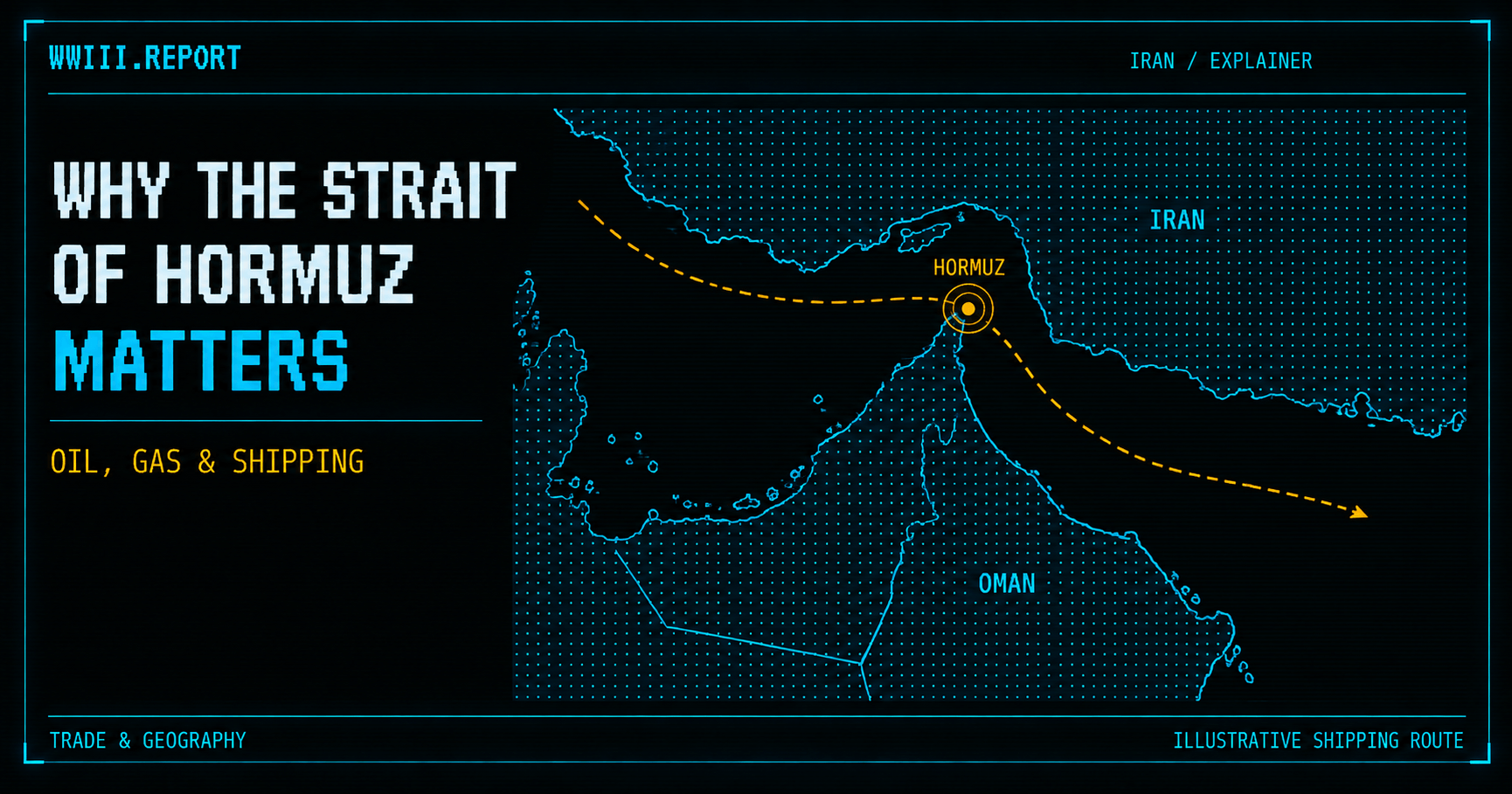
Why is the Strait of Hormuz important? Oil and shipping explained
The Strait of Hormuz connects major Gulf energy exporters with world markets. Its importance comes from the scale of oil and gas shipments, limited alternatives and the difference between a threat to shipping and an actual interruption.
World War 3 4 min read
Emergency food storage: what to buy and how to preserve it safely
A useful emergency food supply covers meals your household can actually prepare. Learn what to store, how to rotate it, and the food-preservation mistakes that can make an emergency more dangerous.
World War 3 10 min read
Europe’s survival guides: official advice for war and emergencies
Compare Europe’s official preparedness guides, from Sweden’s war brochure to Switzerland’s emergency supplies advice. Find resources for 31 countries and see how recommendations differ between 72 hours, one week and ten days.