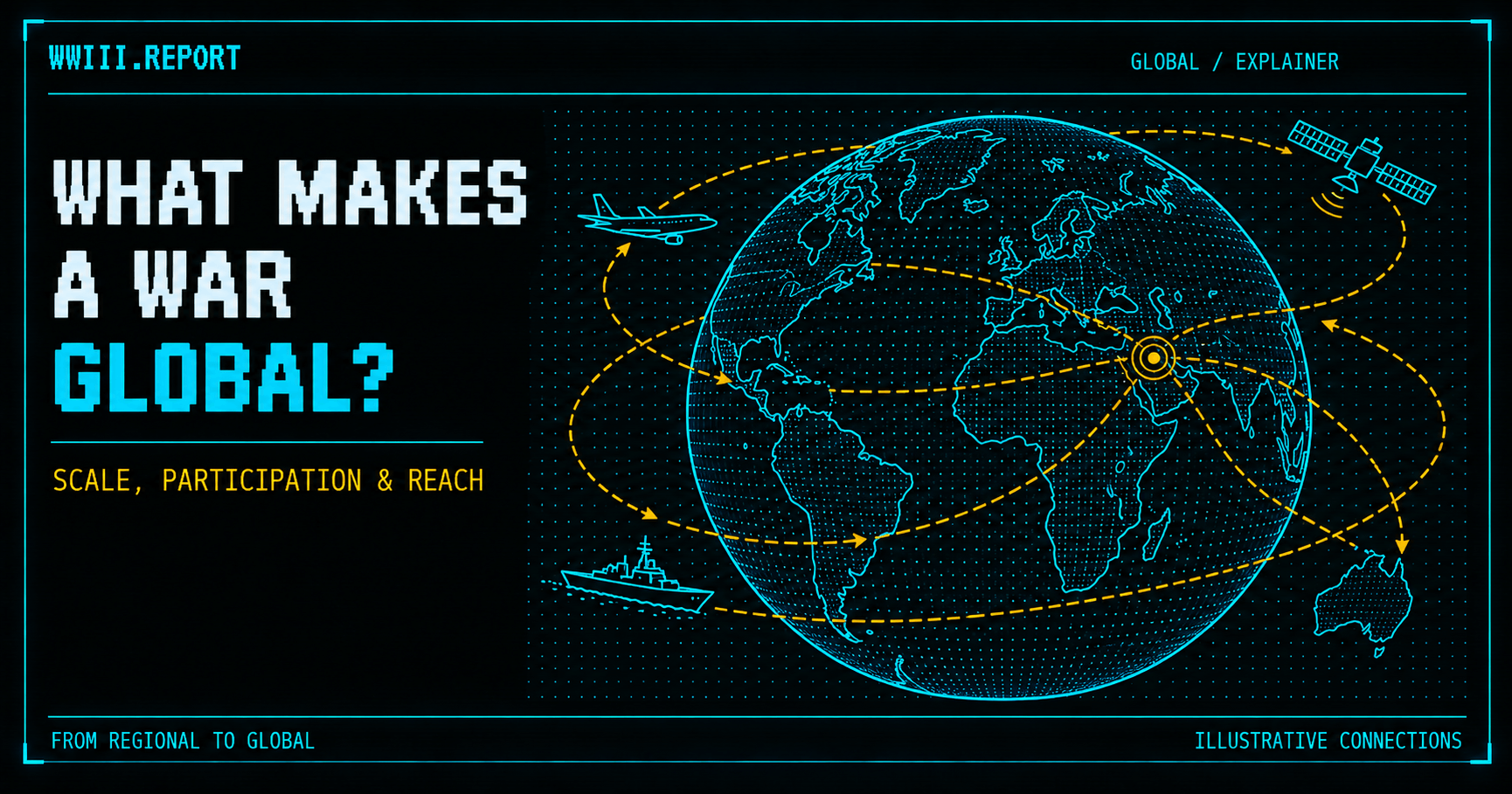
What makes a conflict a world war?
A world war involves major powers fighting connected campaigns across regions. Foreign support and worldwide economic disruption can make a regional conflict internationally significant without turning it into a world war.
Contents
- What made the Second World War global?
- Why a war with foreign participants can remain regional
- Three questions help distinguish the scale
- Could the Ukraine war become a world war?
- Can a regional war have global consequences?
- Does “world war” mean “nuclear war”?
- Why WWIII.report separates local severity from global escalation
A world war is a connected conflict involving major powers and sustained fighting across several regions. The defining features are the breadth of participation, the geographic reach of the campaigns and the decisions linking them together.
There is no country count that automatically turns a war into a world war. A conflict can involve foreign troops, affect international trade and cause enormous suffering while remaining concentrated in one region.
What made the Second World War global?
The Second World War brought major campaigns in Europe, Asia and other regions into a connected struggle among the principal powers and their allies.
The war between China and Japan influenced US relations with both countries. Japan’s attack on Pearl Harbor in December 1941 brought the United States into war with Japan; Germany subsequently declared war on the United States. Conflicts that had developed along different paths became more directly connected through the participation of major states. US Office of the Historian.
The important feature was the link between the campaigns. Governments were fighting a broader war whose fronts affected their shared military and political objectives.
That is different from adding together every conflict happening during the same year.
Why a war with foreign participants can remain regional
The Korean War involved North Korea, South Korea, Chinese forces and a US-led United Nations Command. The 1953 armistice was signed by commanders representing the UN Command, Korean People’s Army and Chinese People’s Volunteers. Despite that international participation, the war remained geographically concentrated on the Korean Peninsula. Korea timeline.
Foreign involvement therefore matters, but its form and scale matter too. A war does not become global simply because a distant country sends troops or provides equipment.
The question is whether major states have joined sustained, connected campaigns across regions.
Three questions help distinguish the scale
Who is fighting directly? Arms deliveries, political support and humanitarian assistance are different from a country conducting its own military operations.
Where is sustained fighting taking place? An isolated incident in a distant location is different from an established additional front.
What connects the campaigns? Shared military decisions, opposing coalitions and linked war aims can connect fronts. Events occurring at the same time may still have different actors and causes.
These questions explain more than a headline count of active conflicts.
Could the Ukraine war become a world war?
It could expand if additional major powers entered direct combat and the fighting spread into connected campaigns elsewhere. That is a scenario for escalation, rather than a description that follows automatically from foreign support to Ukraine.
The Russia–Ukraine timeline follows the war itself. The separate Russia–NATO timeline follows the confrontation between Russia and the alliance. The distinction allows developments in one to be connected to the other without assuming they are already the same war.
A direct, sustained Russia–NATO conflict would represent a major expansion in participation. Whether it became a world war would also depend on the broader geographic and political course of the fighting.
Can a regional war have global consequences?
Yes. A regional conflict can disrupt shipping, energy supplies or food exports used by countries around the world. It can also produce displacement and political consequences far beyond the battlefield.
That global impact does not make every affected country a combatant. A government can face higher import costs while remaining outside the fighting.
This distinction is central to understanding the Yemen–Red Sea conflict: a threat to a commercial route can have much wider reach than the military operations creating it.
Does “world war” mean “nuclear war”?
No. The terms describe different features. “World war” concerns participation and the connection between fronts. “Nuclear war” concerns the use of nuclear weapons.
A conventional conflict could become global. A nuclear exchange could also occur within a geographically concentrated conflict. Nuclear-armed states entering direct combat would raise grave risks, but nuclear use would still be a separate development.
Why WWIII.report separates local severity from global escalation
WWIII.report uses a theater War Index and a separate global WW3 Risk Index. The distinction reflects two questions: how far a particular conflict has gone, and how conflicts may become connected. Methodology.
An attack can make an existing war more destructive without opening another front. A smaller incident can create an important decision for an outside power. Both deserve attention, but they change different parts of the global picture.
Tags Escalation Explainer Military history World War 3
SOURCES 6 · checked 11 Sep 2026
- US Office of the Historian history.state.gov
- Korea timeline wwiii.report
- Russia–Ukraine timeline wwiii.report
- Russia–NATO timeline wwiii.report
- Yemen–Red Sea conflict wwiii.report
- Methodology wwiii.report
READ NEXT

World War 3 5 min read
How could World War 3 start? Five scenarios explained
A regional conflict could widen if major powers enter direct combat and fighting spreads across regions. Five scenarios explain how that could happen, and where diplomacy and restraint could interrupt escalation.
World War 3 4 min read
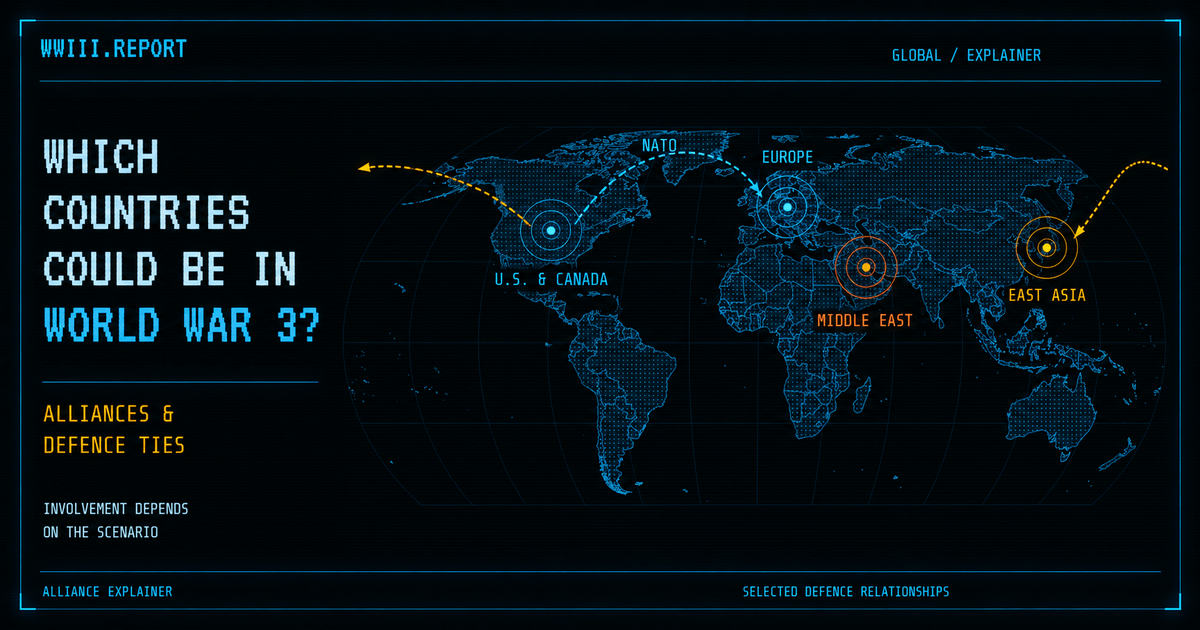
Which countries could be involved in World War 3?
The countries involved in a wider war would depend on where it began and how governments responded. NATO commitments, US alliances in Asia and foreign military bases help explain the possible roles.
Russia – NATO Tensions 4 min read
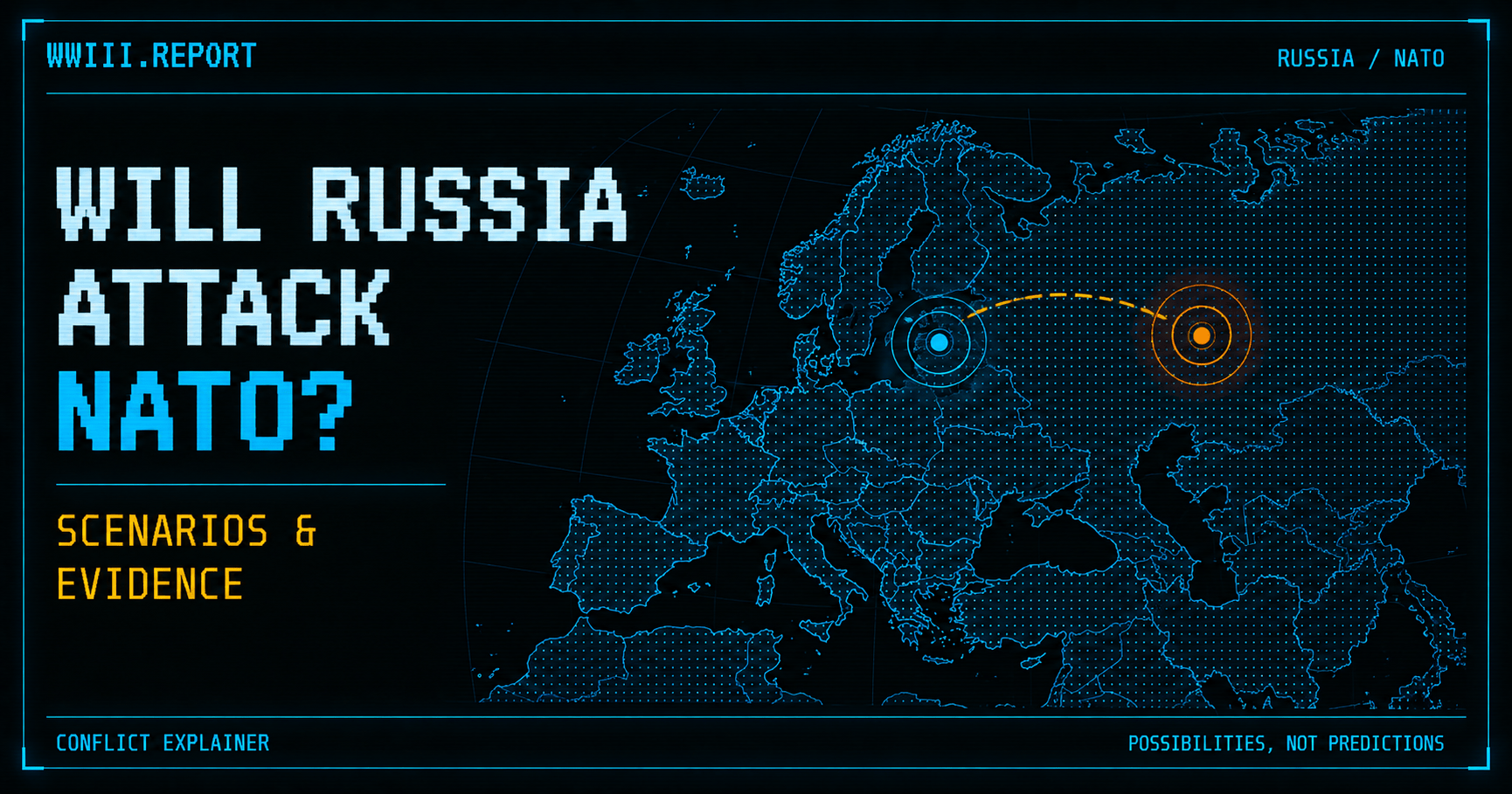
Will Russia attack NATO? Scenarios and evidence to watch
Russia–NATO tensions can escalate through deliberate attacks, spillover or miscalculation. Dated incidents and intelligence assessments explain the risks without turning military preparations into a prediction of war.