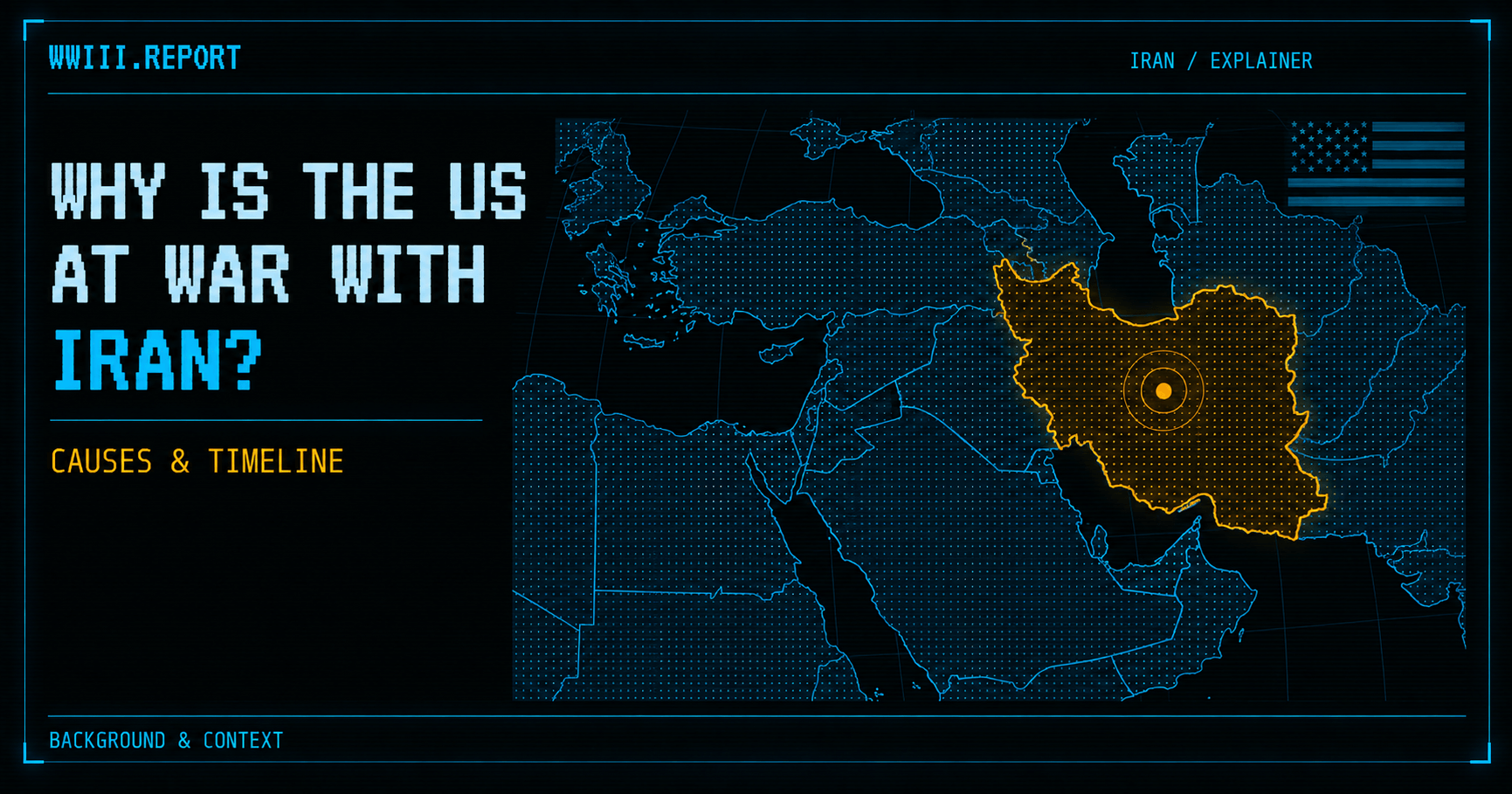
Why is the US at war with Iran? Causes and timeline
The 2026 US–Iran war followed decades of hostility, a disputed nuclear programme and earlier military exchanges. This explainer separates the decision to launch strikes from each government’s stated reasons.
Contents
The United States entered the 2026 war with Iran on 28 February, when American and Israeli forces began strikes on Iran. Washington presented the campaign as an effort to remove nuclear and military threats. Tehran described it as an attack on its sovereignty and responded with strikes across the region. The opening of the conflict is documented by the House of Commons Library.
Understanding why the US is at war with Iran requires separating three things: the immediate decision to attack, the reasons officials gave, and the longer confrontation that made another crisis possible.
What reasons did the US give for attacking Iran?
The Trump administration said its aims included preventing Iran from acquiring a nuclear weapon, damaging its ballistic missile capabilities, weakening armed groups it supports and degrading its navy. Its 1 March 2026 statement also described an imminent nuclear threat.
These are the US government’s stated reasons. The statement establishes what Washington argued; it does not independently prove every claim about Iran’s capabilities or intentions.
Iran’s foreign ministry took the opposite position. It condemned the strikes as aggression and invoked a right to defend the country. Iran’s published response helps explain Tehran’s position, but its account of responsibility also comes from a participant in the war.
The disagreement matters because “why did the US attack?” and “was the attack justified?” are different questions. The first can be answered by identifying decisions and declared objectives. The second requires examining the supporting evidence and the competing arguments.
Was the conflict only about nuclear weapons?
No. The US objectives also covered missiles, maritime power and Iran’s regional partners. The nuclear dispute was nevertheless central to the diplomacy before the strikes.
On 2 March 2026, the International Atomic Energy Agency said it had lacked access to Iran’s previously declared enriched-uranium inventories for more than eight months. It could not provide assurances that declared material at affected facilities remained in peaceful use. That was a serious verification gap. It was not an announcement that inspectors had found a completed Iranian nuclear weapon. Read the IAEA’s dated assessment.
Keeping those distinctions clear prevents two errors: treating missing verification as proof of a bomb, or treating the absence of such proof as evidence that there was no nuclear concern.
What happened to negotiations before the war?
Indirect US–Iran negotiations took place in February 2026. The IAEA’s director general participated in the Geneva discussions and later said the parties had not reached an understanding. His 2 March account called for a return to negotiations and a verifiable agreement.
The existence of talks did not mean a deal was settled. Equally, the outbreak of fighting does not establish that diplomacy had no remaining possibilities. What is documented is that the two governments had not concluded an agreement before the attacks began.
Which earlier events help explain the US–Iran war?
The conflict has a longer history than the 2026 campaign. These milestones provide context without suggesting that another war was inevitable.
| Period | Why it matters |
|---|---|
| 1953 | US and British involvement in the overthrow of Prime Minister Mohammad Mosaddegh became a lasting source of Iranian distrust. |
| 1979–1981 | Iran’s revolution and the US embassy hostage crisis transformed relations between the two states. |
| 2015 | The nuclear agreement, known as the JCPOA, exchanged limits and verification measures for sanctions relief. |
| 2018 | The US withdrew from that agreement and renewed its pressure campaign; Iran subsequently expanded enrichment beyond the deal’s limits. |
These earlier milestones are covered in the Council on Foreign Relations’ historical timeline.
Another important turning point came in June 2025. Israel attacked Iranian nuclear and military targets; the US subsequently conducted strikes, and Iran attacked a US base in Qatar. A ceasefire followed on 24 June. Those exchanges preceded the February 2026 campaign and should not be confused with its start. See the parliamentary briefing on the 2025 fighting.
For a wider sequence of events, use the Iran conflict timeline.
Do talks mean the war is over?
Talks, a ceasefire and a lasting settlement describe different stages. Negotiations can continue during fighting; an agreement to pause attacks may leave the underlying disputes unresolved.
On 22 September 2026, Reuters reported that President Trump said US–Iran talks were continuing and that he expected an eventual deal. That statement expressed his expectation, rather than confirming a completed settlement. Read the Reuters report.
For subsequent developments, follow the Iran war monitor. The questions to watch are whether agreements have been announced by the parties, what they cover, and whether the promised steps are being implemented.
Tags Conflict history Iran war Nuclear diplomacy United States
SOURCES 10 · checked 23 Sep 2026
- The opening of the conflict is documented by the House of Commons Library commonslibrary.parliament.uk
- 1 March 2026 statement whitehouse.gov
- Iran’s published response en.mfa.gov.ir
- Read the IAEA’s dated assessment iaea.org
- 2 March account iaea.org
- Council on Foreign Relations’ historical timeline cfr.org
- See the parliamentary briefing on the 2025 fighting commonslibrary.parliament.uk
- Read the Reuters report boereport.com
- Iran conflict timeline wwiii.report
- Iran war monitor wwiii.report
READ NEXT
Iran War 3 min read
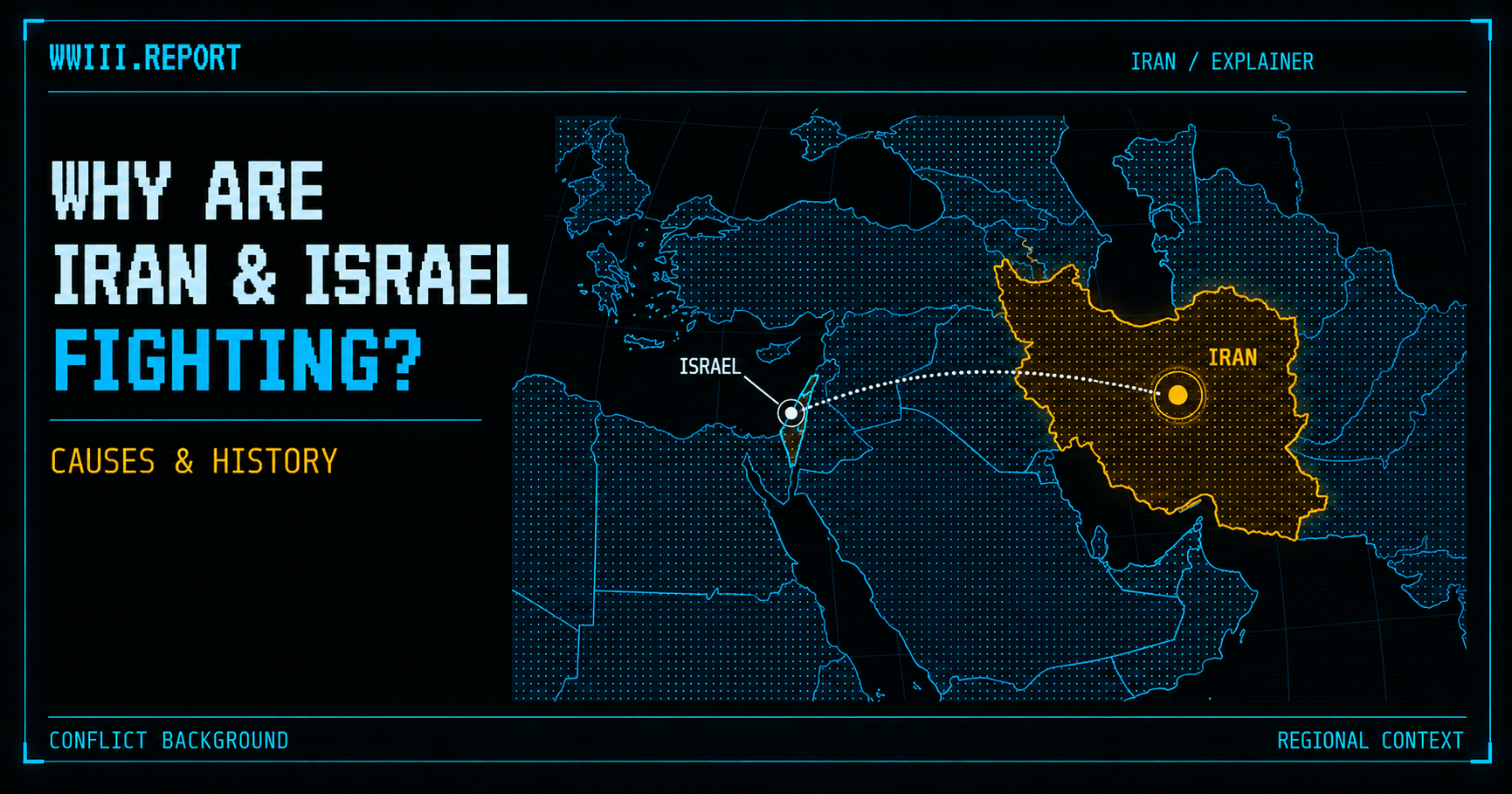
Why are Iran and Israel fighting? Causes and history
Iran and Israel’s confrontation grew from a political break after 1979, rival security strategies, armed partnerships and the nuclear dispute. Direct attacks in 2024 and the wars of 2025 and 2026 changed its scale.
Iran War 4 min read
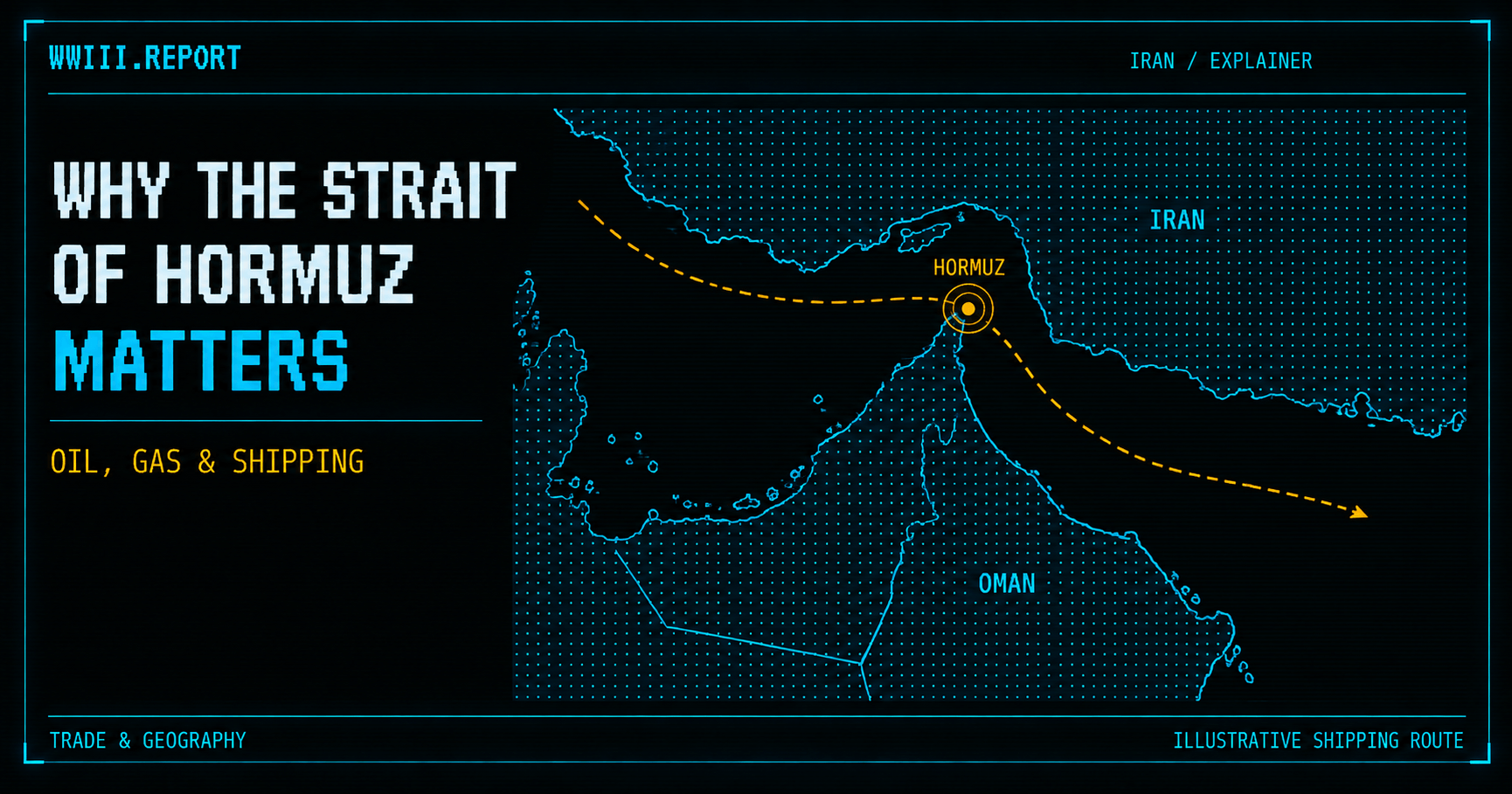
Why is the Strait of Hormuz important? Oil and shipping explained
The Strait of Hormuz connects major Gulf energy exporters with world markets. Its importance comes from the scale of oil and gas shipments, limited alternatives and the difference between a threat to shipping and an actual interruption.
World War 3 4 min read
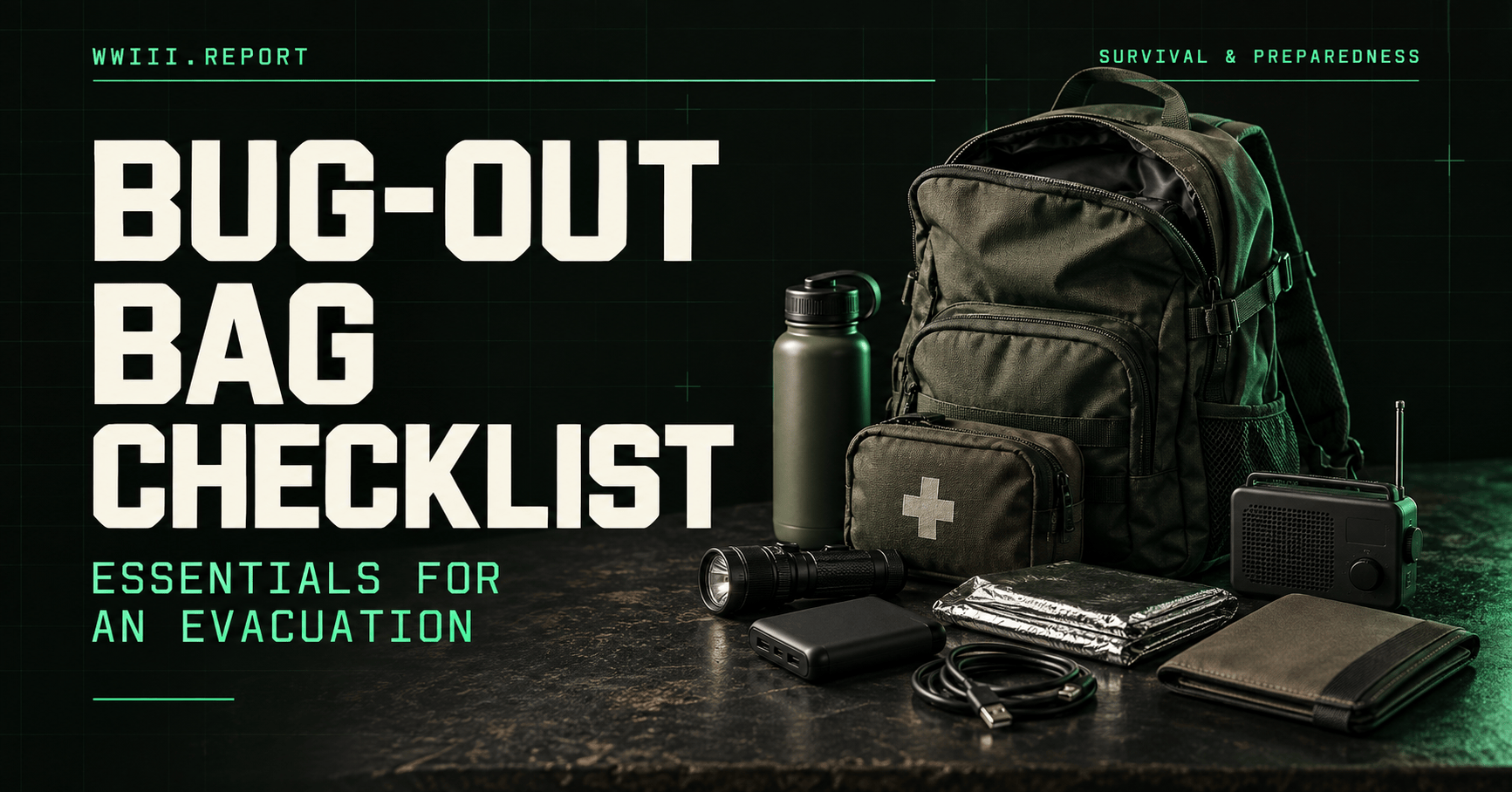
Bug-out bag checklist: what to pack for an evacuation
A bug-out bag should help you leave safely and manage essential needs on the way to a planned destination. This checklist covers water, food, documents, medication, communication and the practical limits of a 72-hour bag.